Research and Design
Elaheh Demirchelie investigates the convergence of real estate development, architecture, and technology to advance resilient, equitable urban environments. Her work spans multifamily housing, mixed-use master plans, sustainable development frameworks, and the evolving dynamics of urban living—domains she has rigorously explored through funded research at the Massachusetts Institute of Technology and the Georgia Institute of Technology, as well as through research initiatives at Demirchelie LLC.
Her investigations examine how design excellence, disciplined capital strategy, and sustained community and stakeholder engagement can together unlock superior investment returns and enduring social value. Integrating digital technologies, data-driven planning methodologies, and spatial intelligence, her work contributes to the broader discourse on redefining the built environment amid emerging social, environmental, and economic imperatives.
This body of work is enriched by collaborations with distinguished professors, visionary cofounders and co-conspirers, dedicated researchers, and the many students who have partnered with Demirchelie LLC over the years to explore critical questions shaping the future of the built environment.
Real Estate Development
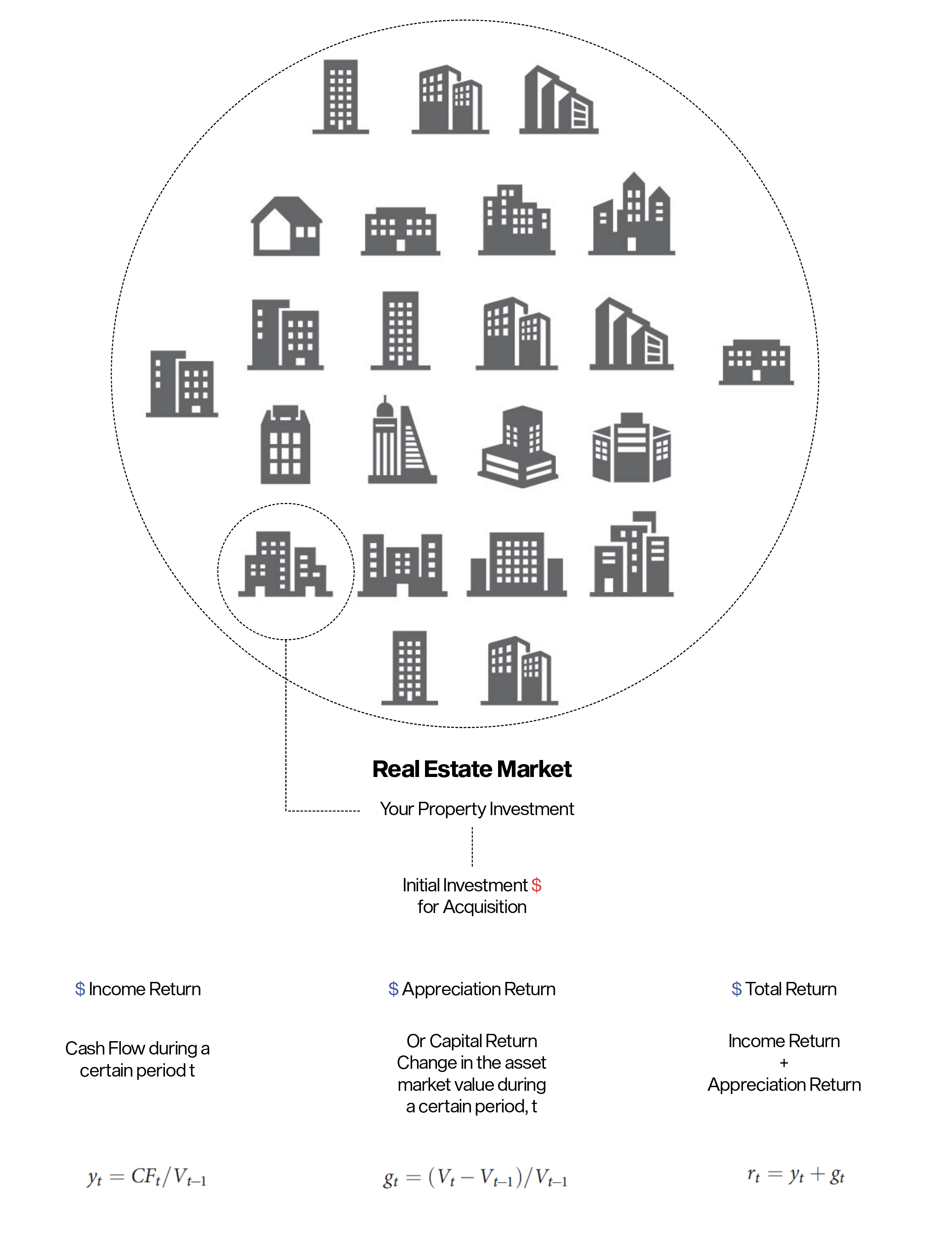
Visual Communication of Key Concepts in Commercial Real Estate Analysis and Investment
This project explores the epistemological role of visual communication in elucidating foundational concepts within commercial real estate analysis and investment. By employing diagrammatic reasoning, spatial abstraction, and representational design methodologies, the research interrogates how complex financial constructs—such as valuation frameworks, risk-return models, and capital structuring—can be spatialized to facilitate cognitive accessibility and analytical precision. Situated at the intersection of design thinking and financial pedagogy, the study contributes to the development of more effective didactic strategies and cross-disciplinary literacies in the field of real estate education.

AI FOR INTERIOR APPLICATIONS
This research employs machine-learning algorithms to increase efficiency in interior design workflows and product search. By coupling spatial data with extensive furniture and finishes catalogues, it automates style and dimension matching, optimizes layout generation, and enables image-based retrieval of design elements. Conducted in collaboration with Bay Area and MIT ML scientists, the project demonstrated how computational intelligence streamlines the creative practice and support evidence-based design decisions.
Funded by Sandbox Innovation Fund at MIT
Year: 2019-2023

SUSTAINABILITY IN FASHION, LIFE-CYCLE ASSESSMENT
LEONOEL is a San Francisco–based sustainable product company specializing in compostable, biodegradable, and reclaimed materials for everyday goods. The brand integrates design innovation, environmental science, and cutting-edge production techniques to minimize environmental footprints across the entire lifecycle of its products. Through thoughtfully crafted collections, LEONOEL advances ecological responsibility and invites consumers into a regenerative approach to living.
+ Dr. Kristen Mitchell + AquaNRG, Year: 2018
Learn More LEONOEL
NET ZERO ENERGY COMPACT HOUSING
This research aims to reimagine 21st-century housing models that respond to shifting urban demographics, ambitious sustainability goals, and evolving energy demands. Through rigorous inquiry and thoughtful design, the work proposes integrated housing and public space solutions that are both environmentally responsible and architecturally refined.
Independent Research + Michael Gamble, Gamble & Gamble Architects; Alcoa Foundation, Resource Furniture, New York; Sarah Watson, Deputy Director at Citizens Housing & Planning Council, New York;
Sarah mcconnell; Patrick Chopson, Pattern R+D
Year: 2014
PASSIVE SOLAR SUSTAINABILITY STRATEGIES
This research investigates the non-linear interactions between air temperature, radiant temperature, airflow, humidity, and ventilation to identify and optimize passive solar energy strategies across diverse climate zones. By modeling these complex environmental variables and their dynamic interdependencies, the project seeks to advance climate-responsive design approaches that reduce reliance on mechanical systems. The ultimate aim is to develop adaptable, low-energy architectural solutions that enhance occupant comfort while supporting long-term sustainability goals.
Independent Research + Godfried L. Augenbroe, Year: 2014

NET ZERO ENERGY AFFORDABLE HOUSING
As global urbanization accelerates—with over 70% of the world’s population projected to live in cities by 2050—there is a critical need to rethink housing typologies and urban form. This research explores innovative, high-density housing models that promote vitality, spatial efficiency, and social well-being. Grounded in principles of walkability, multimodal transportation access, and strategic proximity to key urban nodes—including cultural institutions, healthcare, education, and entertainment—the work aims to shape more resilient, connected, and livable cities. By integrating urban design, mobility systems, and architectural innovation, the research addresses the urgent demands of 21st-century urban life.
Independent Research + Michael Gamble, Architect, GG ARCHITECTS, Year: 2013


VERTICAL FARMING, FUTURE FOOD PRODUCTION SYSTEMS
The compounded pressures of global population growth, accelerated urbanization, climatic instability, and the degradation of freshwater resources are rapidly constraining the viability of traditional agricultural practices. This research investigates vertical farming as an advanced, integrative model for urban food production—one capable of decoupling agriculture from geographic and environmental limitations. By leveraging high-density spatial strategies, controlled-environment agriculture (CEA), and closed-loop resource systems, vertical farming reconfigures the food supply chain within the urban fabric. The study examines the spatial, technological, and ecological dimensions of this emerging typology, emphasizing its capacity to reduce ecological footprint, mitigate supply chain vulnerabilities, and embed agricultural productivity directly within the architectural and infrastructural systems of future cities.
+ Judy O’Buck Gordon, Architect, Year: 2012

SOLAR PASSIVE ENERGY ANALYSIS IN ANCIENT ISLAMIC ARCHITECTURE
This research interrogates the continuum between contemporary passive‐solar design and technologically driven active systems by undertaking a critical historiographic analysis of pre-modern Islamic architecture. Through a systematic examination of vernacular devices—such as mashrabiya lattice screens, badgir wind towers, courtyard water features, muqarnas vaulting, and thermally massive masonry walls—the study reconstructs the thermodynamic logics that enabled effective shading, humidity modulation, evaporative cooling, and cross-ventilation in the hyper-arid milieus of the Middle East. By digitizing and taxonomizing these strategies within a comprehensive repository, the project re-positions their latent environmental intelligence as operative knowledge for net-zero architecture and climate-responsive urbanism, thereby enriching contemporary discourse on sustainable design and development.
Independent Research + Dr. Sonit Bafna, Year: 2009